
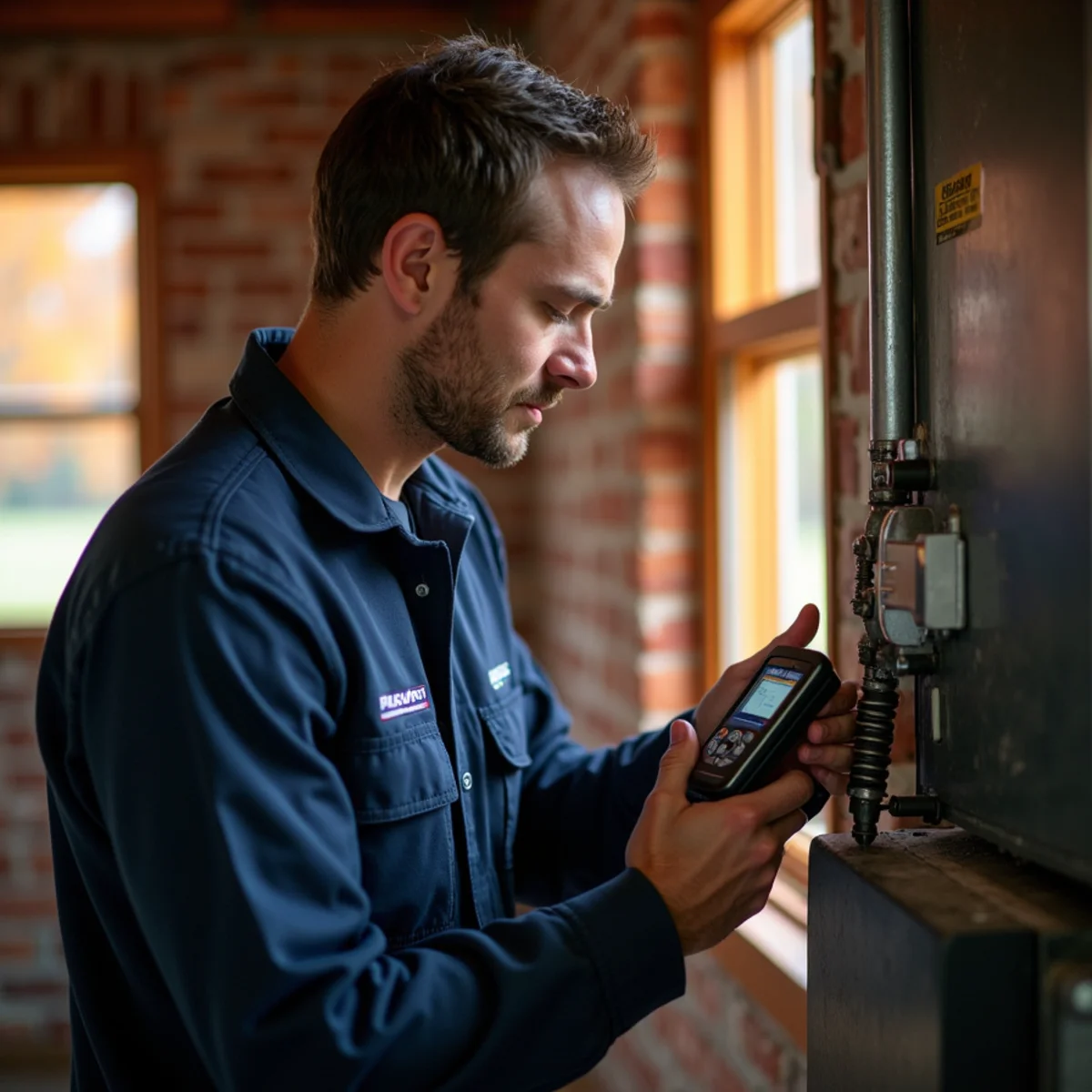
Every Frankfort winter produces the same story: the furnace that ran 'fine' all fall quits the night the temperature first kisses the low 20s. The problem was never the cold night — it was the three unexamined months before it. Fall tune-ups exist to move those discoveries from January emergencies to October appointments.
Here's the checklist: what you can do yourself this weekend, and what a professional visit covers — the items that keep combustion safe and ignition reliable through a real Kentucky heating season.
The DIY Layer: Twenty Minutes, Real Value
Change the filter — the single highest-value item on this page. Kentucky's four-season runtime loads filters fast, and a choked filter causes overheat shutdowns, short-cycling, and the exact January failures that become service calls. Hold it to a light; if the light loses, swap it. Write the date on the new one.
Test the thermostat through a full heating cycle and replace its batteries if it's battery-powered. Clear the furnace area — a three-foot clearance of anything combustible, no storage against the unit. Check that supply and return vents are open and unblocked (closed rooms choke airflow system-wide). And test your CO detectors: press the button, check the expiry date, and replace anything past its service life.
- Change the filter — the single highest-value item on this page. Write the date on the new one.
- Test the thermostat through a full heating cycle and refresh its batteries.
- Clear three feet around the furnace; no storage against the unit.
- Confirm supply and return vents are open and unblocked room by room.
- Test CO detectors and replace anything past its expiration date.
The Professional Layer: What Our Visit Covers
Combustion analysis first: we measure how the burners are actually burning — oxygen, CO, stack temperature — because combustion drifts slowly over years and only instruments see it. Gas pressure verification follows, then the heat exchanger inspection: eyes, lights, and sometimes smoke, because a cracked exchanger is the one furnace finding that's automatically serious.
Then the reliability list: inducer motor and pressure switch operation, ignitor condition (we replace marginal hot-surface ignitors proactively — they're cheap and they strand people), flame sensor cleaning, blower motor amps and capacitor readings, temperature rise verification against the nameplate, safety-limit tests, and condensate system service on high-efficiency units.
Need this handled by a pro today?Same-day service across Franklin County • 24/7 emergency dispatch
Call +1 (327) 210-5999The Vents: Kentucky's Winter-Specific Failure
High-efficiency furnaces breathe through PVC pipes that terminate outside — and Kentucky winters attack them: ice glaze after freezing rain, drifting snow, bird nests in fall. A blocked vent trips the pressure switch and the furnace locks out on the coldest night, with a diagnostic that starts with 'have you looked at the pipes?'
On your DIY walk: locate your intake and exhaust terminations, confirm they're clear and screened, and note their locations for snow-clearing after storms. It's the most location-specific furnace tip in Frankfort and the one most homeowners have never been told.
Timing: When Fall Means Fall in Kentucky
The sweet spot is late September through October — after the cooling season's demands, before the first hard freeze (historically early-to-mid November, with outliers). September visits get the best scheduling flexibility; November visits start competing with the season's first failures.
Maintenance-plan members don't think about this: the plan schedules both seasons automatically, applies repair discounts all year, and removes overtime fees from any emergency that slips through anyway. For most Frankfort households, the plan pays for itself on the first avoided ignition failure alone.
The Yellow Flags Between Tune-Ups
Between visits, treat these as call-soon signals: any bang at startup (delayed ignition), short-cycling, a burning smell that lasts past the first run of the season, soot or rust streaking at the burner door, a CO detector that chirps or reads anything, or gas odors (which get the evacuate-first script, not a wait-and-see).
The furnace that gets looked at in October gets repaired at your convenience. The furnace that gets ignored gets looked at in January — by a tech, at 2 AM, at emergency rates. Call +1 (327) 210-5999 and book the fall visit while the weather still agrees with your calendar.
The Bottom Line
The fall tune-up is the cheapest January insurance sold in Kentucky: combustion numbers, ignition parts, venting, and the filter habit — checked while the weather still agrees with your calendar. Book it in late September or October, or join the plan and stop thinking about it. The furnace that gets looked at in October gets repaired at your convenience.
Frequently Asked Questions
Annually — every fall, before the heating season. Our winters are long and hard enough that annual combustion and reliability checks are the difference between 18-year furnaces and 12-year ones.
Skip it and you may also skip your warranty — most manufacturers require documented professional maintenance for coverage, and young-equipment failures are exactly the ones claims protect. A 3-year-old furnace deserves the same October hour as a 13-year-old one.
Marginal ignitors and dirty flame sensors — the parts that fail in the first hard cold snap. Catching them in October is a ten-minute fix; meeting them in January is a no-heat call. The second most common: clogged filters, which you can fix yourself right now.