
If you live in Craw, Bellepoint, South Frankfort's river blocks, or anywhere the Kentucky River and its creeks consider neighborly, you already live by the gauge. Flood season — late winter through late spring, with surprises the rest of the year — is when river-adjacent homeowners either protect their HVAC or meet us during the recovery.
This checklist is written for the weeks before the water, learned across every flood this county has recorded.
Know Your Numbers Before the Water Rises
Know your equipment's elevation: where does your condenser sit relative to the historical high-water marks? Where's your air handler — crawlspace, basement, main floor? Write down the heights and photograph the equipment with something in frame for scale. When water comes, 'how high did it get' becomes the question that decides your claim.
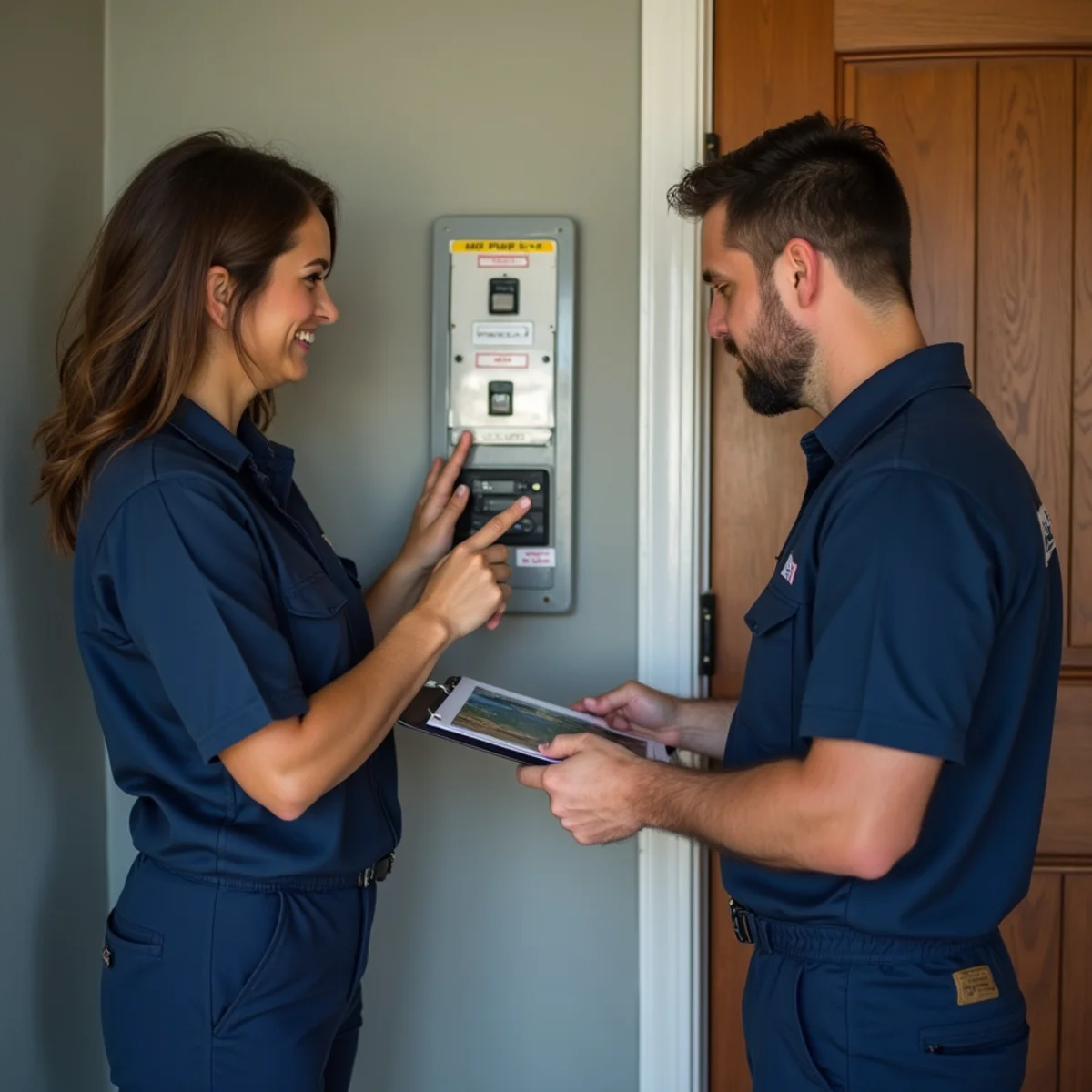
Know your shutoffs: the breakers that feed HVAC equipment (label them — labels in the dark are worth their weight), the gas shutoff if applicable, and your main water valve. Every flood-season homeowner should be able to kill their mechanical systems in under two minutes, by flashlight, in wet boots.
- Your equipment's elevation relative to historical high-water marks — write it down, photograph it with scale.
- The breakers that feed HVAC equipment, labeled — labels in the dark are worth their weight.
- The gas shutoff if applicable, and your main water valve.
- Two minutes, by flashlight, in wet boots: that's the target for killing every mechanical system.
The Pre-Season Equipment Health Check
Spring tune-ups in the river neighborhoods carry an extra agenda: equipment going into flood season should be documented-healthy. Readings on file, photos of condition, a service record that says 'running normally in February' — because the difference between storm damage and pre-existing failure is exactly what insurance arguments are made of.
If your equipment already sits at grade in a known-flood path, pre-season is also when the elevation conversation happens — planning a platform in February is cheap; planning one in May, from a recovery, is not.
Need this handled by a pro today?Same-day service across Franklin County • 24/7 emergency dispatch
Call +1 (327) 210-5999When the Gauge Climbs: The Action Ladder
Watch stage: verify shutoffs accessible, move what's movable (garage-stored units, spare filters), and charge phones. Action stage: if water is predicted to reach equipment, shut the HVAC breakers OFF before it arrives — de-energized equipment survives better and can't electrocute anyone wading. Photograph the equipment and its surroundings at each stage.
Never operate equipment that water has reached, and never wade into energized mechanical spaces. The equipment is replaceable; the person at the switch is the point of all this.
The After-Water Sequence
Once the water drops: photograph everything before cleanup (water lines against equipment, model plates, the drowned and the damp), leave equipment de-energized, and call for professional assessment before any restart attempt. Water that reached electrical components means replacement; water that stayed below sometimes allows cleaning and testing — a professional determination, not a hopeful one.
Then the part homeowners skip until July: the crawlspace and ducts. Saturated duct insulation and river-borne contamination don't dry out on their own schedule, and putting cleaned equipment into a wet crawlspace just schedules the next loss. Duct replacement, drying, and encapsulation belong in the recovery scope.
The Rebuild Standard: Elevate Everything
Every flood-recovery replacement we design in the river neighborhoods gets elevation — platforms and pads above documented high-water marks, relocated electricals, air handlers out of the water's path. April 2025 proved the math again: elevated equipment costs a cleanup; at-grade equipment costs a system.
Call +1 (327) 210-5999 for a pre-season flood-readiness assessment — or during the event, for the recovery. The river neighborhoods of Frankfort have outlasted 1937, 1978, and 2025. The checklist is how your HVAC outlasts the next one.
The Bottom Line
Flood season rewards the prepared: known elevations, labeled shutoffs, documented-healthy equipment, and de-energizing before the water arrives. Afterward, photograph first, restart never, and treat the crawlspace as part of the recovery. The river neighborhoods of Frankfort have outlasted 1937, 1978, and 2025 — the checklist is how your HVAC outlasts the next one.
Frequently Asked Questions
If predicted water will reach equipment, yes — de-energize before the water arrives. It protects the equipment and everyone who might be in the space. If water won't reach equipment, the system can run normally through the event.
It's a chronic problem with cumulative costs: duct insulation that never dries, equipment corrosion, musty air, and the radon pathway. Encapsulation and drainage turn 'a little every spring' into 'not anymore' — and the ducts and equipment last years longer.
NFIP and private flood policies generally cover building-property equipment (outdoor units, furnaces) with limits. Document before cleanup, leave equipment de-energized, and get professional assessment — the claim's speed tracks the documentation's quality.