
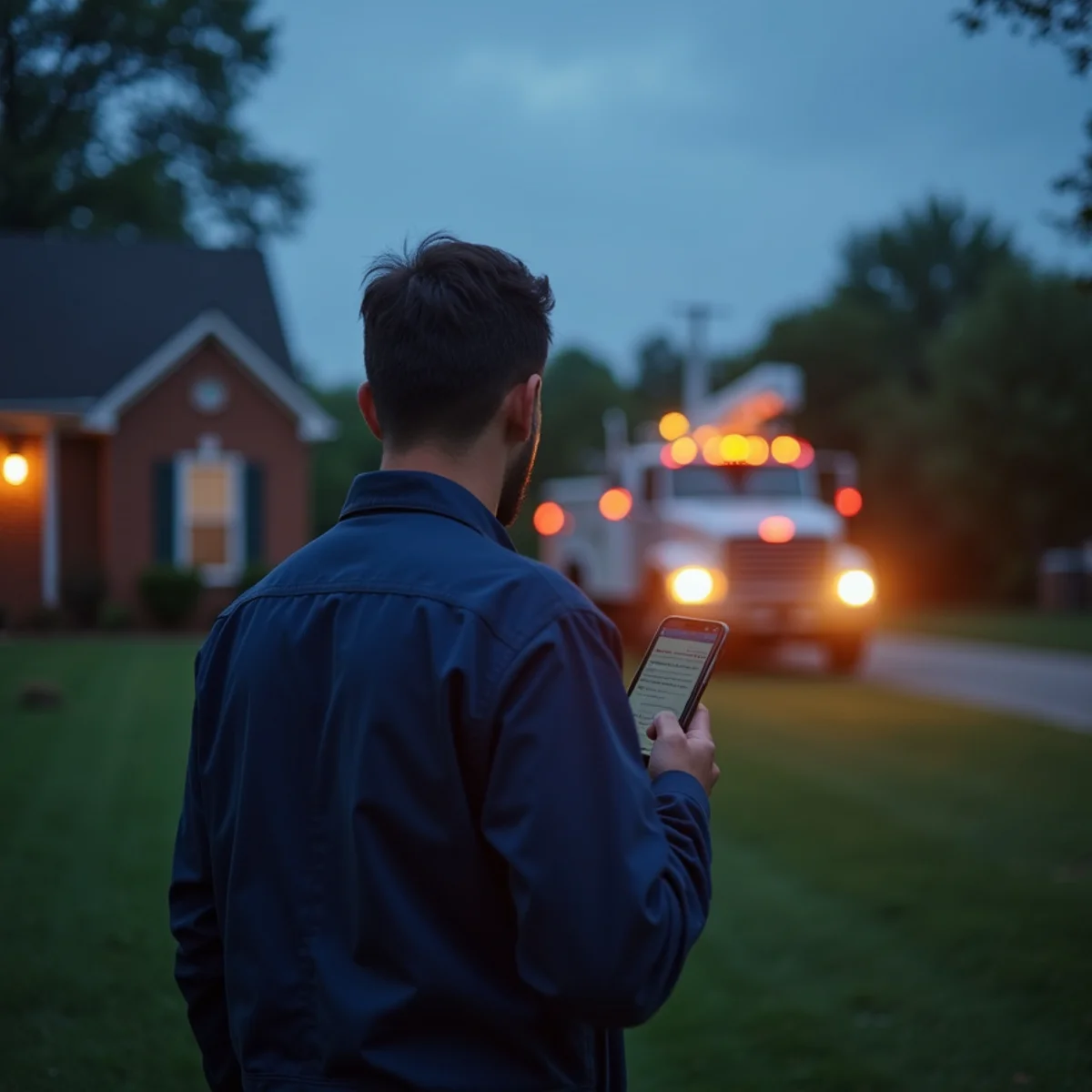
Every winter, a handful of Frankfort homeowners catch the smell — that rotten-egg odor utility companies add to natural gas — somewhere near the furnace. Most will handle it exactly right. A few will hesitate to investigate first, and that hesitation is the only dangerous part of an otherwise straightforward emergency.
Gas odors are the one HVAC symptom with a script, and the script exists because it works. Here it is, plus what happens after the emergency passes.
The Script: What to Do Right Now
If you smell gas strongly, or hear hissing: leave the house immediately with everyone — people and pets. Don't flip switches, don't unplug anything, don't light anything, don't even use your phone inside. Once you're clear of the building, call 911 or the gas utility's emergency line. Then call us for the repair.
If the smell is faint and you're unsure — a whiff at furnace startup that fades — the stakes drop but the protocol doesn't change much: ventilate by opening doors and windows from a safe distance, don't operate switches, and call for guidance. We'd rather answer ten cautious calls than miss one real leak.
Where Furnace Gas Smells Actually Come From
A genuine leak can occur at the gas valve, the flexible connector, the manifold joints, or the supply line — aging connections and recent work are the common culprits. The smell can also report from a furnace that's burning wrong: a delayed ignition lets gas accumulate before lighting, producing a brief odor burst at startup and a bang you may have been ignoring.
Propane homes out in Jett, Choateville, and the rural county add one more source: tank and regulator issues outside the house. Propane is heavier than air and pools in low spaces, which makes the no-indoor-investigation rule even more important.
- A genuine leak at the gas valve, flexible connector, manifold joints, or supply line — aging connections and recent work are the usual culprits.
- Delayed ignition: gas accumulates briefly before lighting, producing an odor burst and that startup bang you may have been ignoring.
- Propane homes: tank and regulator issues outside the house — propane pools low, which makes the no-indoor-investigation rule even more important.
- A cracked heat exchanger or blocked flue producing combustion byproducts — this one rides with CO risk, not smell.
Need this handled by a pro today?Same-day service across Franklin County • 24/7 emergency dispatch
Call +1 (327) 210-5999Carbon Monoxide: The Smell You Won't Smell
Gas you can smell is gas the additive is warning you about. Carbon monoxide is the opposite — odorless, colorless, and produced by incomplete combustion from cracked heat exchangers, blocked flues, or wrong fuel-air mixtures. This is why working CO detectors are non-negotiable in every Franklin County home with combustion heating.
If a CO alarm sounds: get everyone to fresh air immediately, call 911 from outside, and don't re-enter until responders clear the structure. The repair that follows is ours — and it includes finding the combustion fault that produced the CO, not just resetting the alarm.
After the Emergency: Finding and Fixing the Cause
Once the utility has secured the situation, our technician pressure-tests the gas train, leak-detects every joint, and repairs the failed component — valve, connector, regulator, or the ignition issue behind a delayed-lighting furnace. On propane systems we include tank-side checks and regulator testing with the supplier's coordination.
Every gas repair ends the way every gas service call should: a full combustion test, CO verification, and safety-control checks with the numbers recorded on your invoice. Heat restored is the goal; heat restored safely is the standard.
Prevention: The Boring List That Works
Annual fall combustion testing catches the drift that produces odors and CO long before they announce themselves. Flexible gas connectors older than their rated life get replaced proactively. CO detectors get tested monthly and replaced on their expiration dates. And delayed ignition — that bang at startup — gets treated as the warning it is, not a quirk to live with.
Frankfort's gas furnaces work hard from November through March. The ones that never smell like anything are the ones that get looked at once a year.
The Bottom Line
The gas-smell script exists because it works: evacuate, call from outside, let the utility secure, then let a licensed crew find and fix the cause with combustion testing to prove it's safe. Treat every startup bang and every expired CO detector as the warning they are. The furnaces that never smell like anything are the ones looked at once a year.
Frequently Asked Questions
A brief odor at startup can indicate delayed ignition — gas accumulating briefly before lighting. That's a repair-now symptom, not a wait-and-see quirk: it can worsen into a real hazard. Call for service and mention the timing.
If you know where your meter or appliance shutoff is and can reach it safely while evacuating, turning the appliance or meter valve off is reasonable in a strong-smell emergency. Never re-enter a strong-smell situation just to shut something off — evacuate first, always.
The utility responds to secure the emergency and will typically shut supply at the meter. The repair of your furnace, gas train, and combustion safety is HVAC work — that's us, 24/7.