
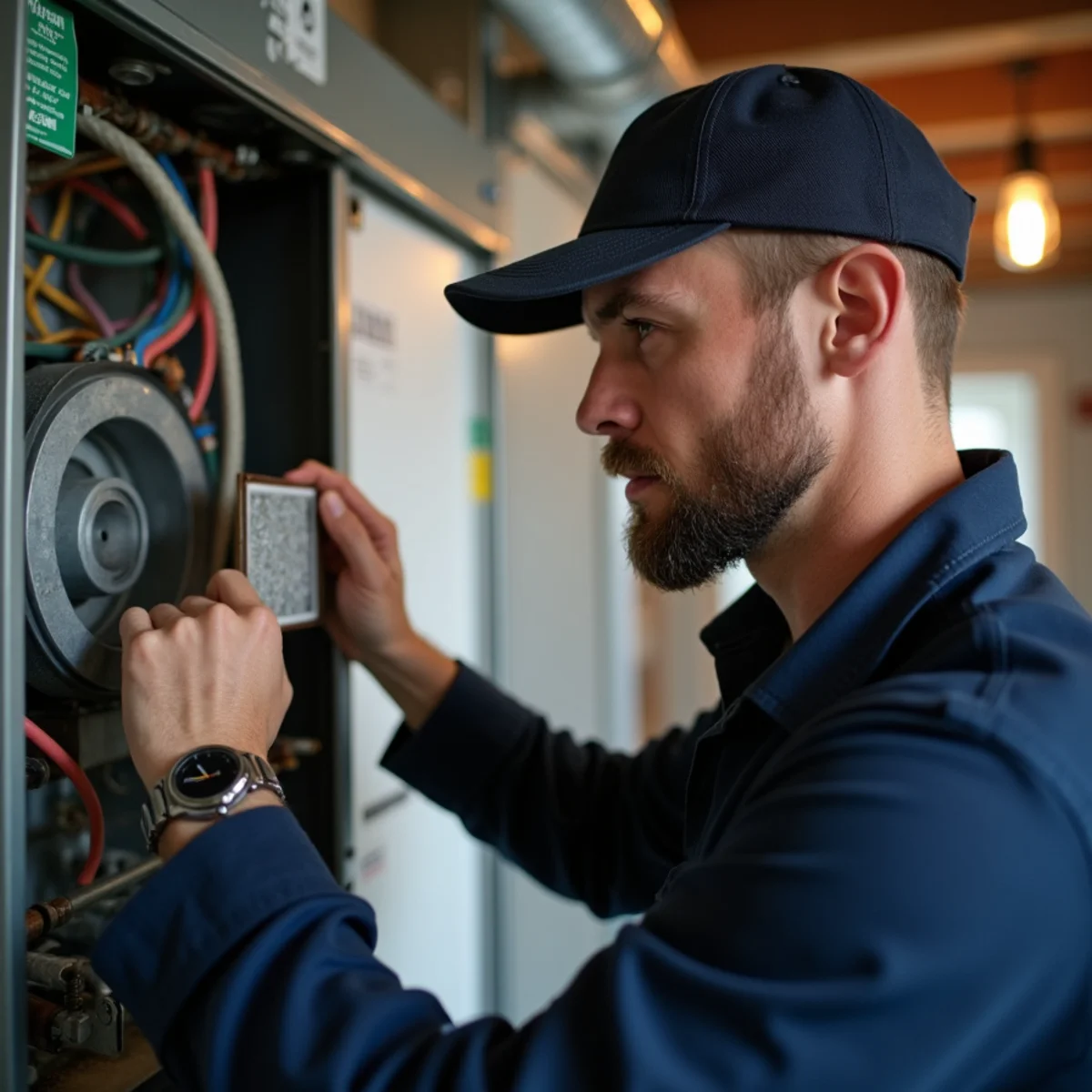
Short-cycling is the furnace version of a check-engine light: the system turns on, runs briefly, shuts down, and repeats — wearing out its most expensive parts while warming nobody efficiently. West Frankfort's post-war ranches and Thornhill's 1980s two-stories both produce their own versions of this complaint every winter.
Here's what actually causes it, in the order we diagnose — because the causes range from a $6 filter to a system that's genuinely done.
Cause 1: The Filter (Yes, Always the Filter First)
A clogged filter restricts airflow until the heat exchanger overheats and the high-limit safety shuts the burners down — then the exchanger cools, the furnace tries again, and the cycle repeats. This is the most common short-cycle cause in Frankfort and the cheapest: a filter swap and an apology to the furnace.
Kentucky's four-season runtime clogs filters fast, and older homes with undersized returns choke even faster. If your furnace 'clicks on and off all evening,' change the filter before anything else — it's free to try and fixes it more often than any other single cause.
Cause 2: The Flame Sensor's Bad Attitude
The flame sensor confirms ignition; if it's coated with an oxide film — a normal byproduct of combustion — it stops seeing flame and shuts the gas off seconds after lighting. The furnace retries, fails, retries. The fix is professional cleaning (it's a thirty-second job with the right pad, a fifteen-minute visit with the right tech).
The tell: the furnace lights, runs briefly, and shuts down consistently — often restarting a few times before giving up entirely and locking out. Annual tune-ups clean sensors as standard practice, which is why maintained furnaces rarely perform this routine.
Need this handled by a pro today?Same-day service across Franklin County • 24/7 emergency dispatch
Call +1 (327) 210-5999Cause 3: Pressure Switch and Venting Problems
Modern furnaces prove their draft is healthy before lighting via the pressure switch. Blocked intake/exhaust vents (leaves, nests, ice in Kentucky winters), failed inducer motors, or cracked pressure tubing all fail that proof, producing rapid start-stop behavior or lockouts.
High-efficiency furnaces are especially sensitive here — their PVC venting runs matter, and snow, ice-glaze, or a bird nest can shut a Thornhill furnace down overnight. We clear, test, and protect venting as part of every heating visit.
Cause 4: The Oversized Furnace
If your furnace has ALWAYS short-cycled, ever since installation, the most likely cause is baked in: it's too big for the house. Oversized furnaces satisfy the thermostat fast — in three-minute bursts — leaving cold floors, hot ceilings, and a machine wearing itself out a decade early. This is the legacy of rule-of-thumb sizing, and it's common in mid-century Frankfort housing.
The fix isn't a repair; it's right-sizing at replacement, with a Manual J calculation instead of a guess. Until then, careful blower-speed and fan-settings tuning can soften the cycling's worst effects.
Cause 5: Thermostat Placement and Wiring
A thermostat in a sunbeam, above a supply vent, or near the kitchen reads lies about the house's temperature and calls heat on and off accordingly. Wiring faults and dying batteries produce choppier versions of the same behavior. We've relocated more Frankfort thermostats than we can count, and each move ended a short-cycling mystery.
Smart thermostats add one more cause: aggressive cycling algorithms and heat-pump/aux configurations set wrong. Sometimes the fix is a settings appointment, not a part.
- Filter: change it first — free and frequent fix
- Flame sensor: cleaned on tune-ups, quick professional fix
- Pressure switch/venting: blocked, iced, or failed — pro visit
- Oversized furnace: cycling forever = sizing problem at replacement
- Thermostat: location, wiring, and settings matter more than brand
The Bottom Line
Short-cycling is a check-engine light: sometimes a $6 filter, sometimes a sizing confession, never something to ignore. Start with the filter, respect the startup bang, and let a combustion-tested diagnosis find the actual cause. The furnaces that cycle cleanly are the ones maintained on purpose.
Frequently Asked Questions
Yes — every start-stop cycle stresses the ignitor, inducer, and blower, and the heat-exchanger's thermal swings are exactly what cracks exchangers over time. Short-cycling is worth fixing for the equipment's sake even if the house feels okay.
A bang at ignition with cycling suggests delayed ignition — gas accumulating before lighting. That's a same-week (preferably same-day) repair, not a quirk: delayed ignition worsens and can become hazardous.
Sometimes — placement and settings issues yes. But a new thermostat on a clogged filter or a dirty flame sensor just documents the cycling more precisely. Diagnose the cause first; buy hardware second.