
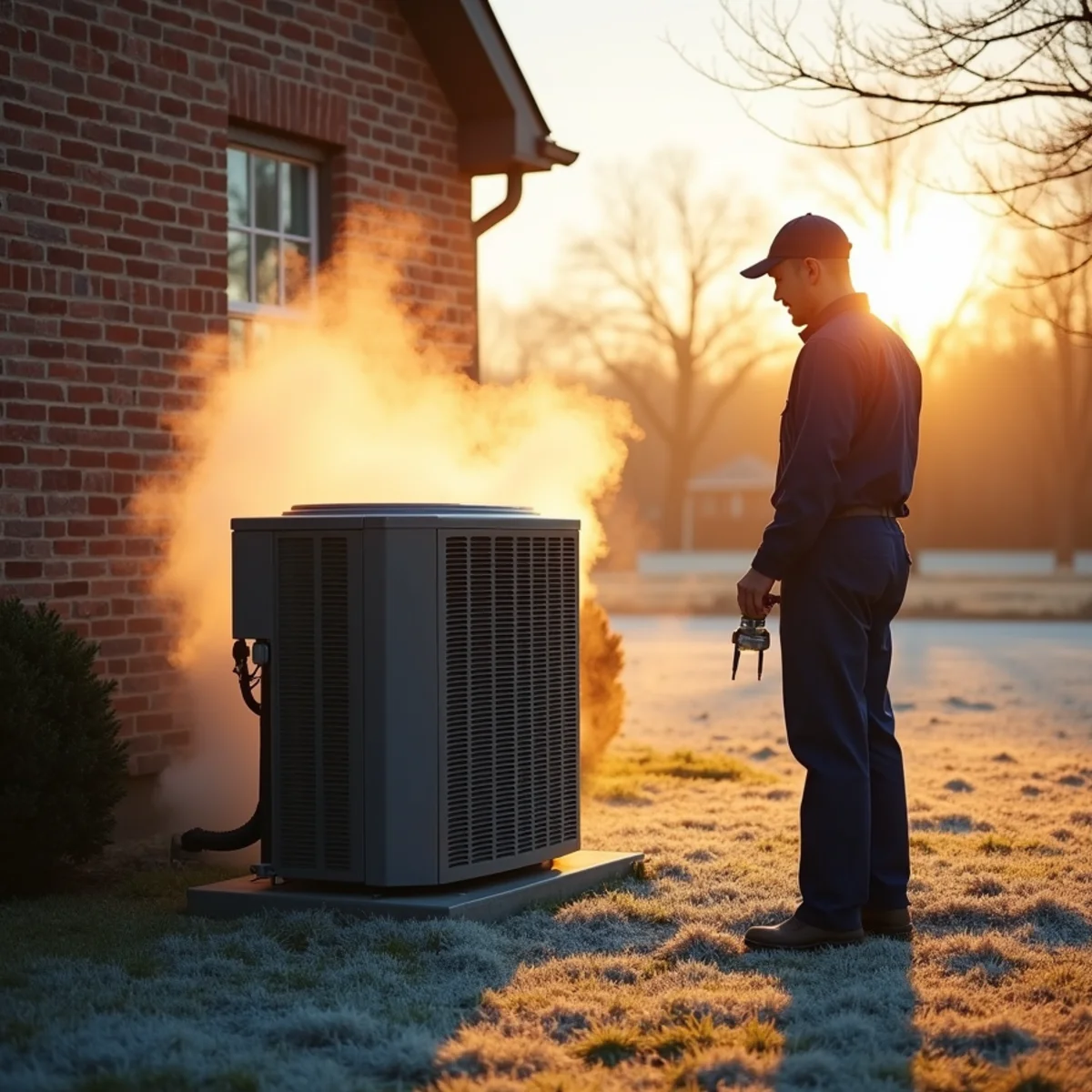
Somewhere around the first hard freeze, every Frankfort heat pump owner asks the question: is my outdoor unit supposed to look like that? Sometimes the answer is 'that steam is the machine working perfectly.' Sometimes it's 'turn it to emergency heat and call us.' The difference is defrost — what it does, and what it looks like when it stops doing it.
Here's the homeowner's field guide to winter icing, from the crew that answers this question from Bald Knob to Woodlake every January.
Why Heat Pumps Ice at All
A heat pump in heating mode pulls heat from outdoor air, which means the outdoor coil runs colder than the air around it. In Kentucky's damp cold — 28° with 80% humidity is our specialty — that coil collects frost the way a cold drink collects condensation. The frost is inevitable; the design question is how the unit gets rid of it.
The answer is the defrost cycle: the unit briefly reverses into cooling mode, sending hot refrigerant through the outdoor coil to melt the frost while a backup source (or coast-through thermal mass) keeps the house comfortable. You'll see steam rising off the unit, hear the reversing valve shift, and maybe notice supply air running cool for a few minutes. Normal, a few times an hour in bad weather.
When Defrost Fails: The Four Usual Suspects
Defrost board or sensor failure: the unit stops knowing it's iced and never reverses — ice accumulates until the coil is blocked and the fan stalls. Reversing valve failure: the unit can't switch modes, so defrost never happens. Low refrigerant: less heat available at the coil means frost outpaces melting. Airflow problems: a clogged filter or blocked return changes coil temperatures and defrost timing.
The symptoms overlap and the fixes differ, which is why 'my unit ices up' is a diagnostic appointment rather than a parts-order. The good news: three of the four causes are same-visit repairs with stocked trucks.
Need this handled by a pro today?Same-day service across Franklin County • 24/7 emergency dispatch
Call +1 (327) 210-5999The Settings Mistakes That Make It Worse
The most common homeowner mistake we see: aggressive thermostat setbacks. Dropping a heat pump thermostat 8° overnight forces expensive recovery with AUX heat in the coldest morning hours — exactly when capacity is lowest. Modern guidance: small setbacks (2–3°) or none, let the unit cruise.
Second: covering outdoor units 'for winter.' Heat pumps need airflow year-round; covers trap moisture and defeat defrost. Third: 'EM heat' as a default setting — emergency heat exists for failures and backup, not for everyday operation at triple the running cost. And fourth: ignoring the first light icing of the season, which is often the first symptom of a sensor drifting toward failure.
- Aggressive thermostat setbacks: dropping 8° overnight forces expensive AUX recovery in the coldest hours. Small setbacks (2–3°) or none.
- Covering the outdoor unit 'for winter' — heat pumps need airflow year-round; covers trap moisture and defeat defrost.
- EM heat as an everyday setting: it exists for failures and backup, not daily operation at roughly double the running cost.
- Ignoring first light icing of the season — often the first symptom of a sensor drifting toward failure.
Ridgetop vs. Valley: Why Location Matters
Wind-driven freezing rain coats exposed units first, which is why Bald Knob's ridgeline homes see heavier icing than valley properties. Placement helps — windbreaks, proper clearances, pad elevation for drift — and so does fall maintenance that verifies sensor and board health before the season's first event.
If your unit iced badly in the 2009-style events and again every winter since, that pattern is worth diagnosing rather than enduring: repeated heavy icing is almost always a correctable component or setup issue.
A Winter Checklist for Heat Pump Owners
Keep the filter fresh (monthly in heavy season). Keep snow and drift off the pad. Keep vegetation clear for airflow. Watch for the normal-vs-problem signs: steam and short cool-blow cycles are fine; unit-wide ice that never clears, a stalled fan, or breaker trips mean switch to EM heat and call. And schedule the fall tune-up — the defrost system check is the single most winter-relevant inspection a Frankfort heat pump gets.
Call +1 (327) 210-5999 if your unit is telling you a story you don't recognize. Defrost problems are among our fastest winter repairs — when they're caught before the compressor pays for them.
The Bottom Line
Winter icing is a heat pump's normal workload — until it isn't. Watch the steam, respect the solid ice, keep the settings disciplined, and let the fall tune-up audit the defrost system before January audits it for you. When your unit tells a story you don't recognize, our winter trucks know it by heart.
Frequently Asked Questions
No — that's water vapor from the normal defrost cycle melting frost. It looks dramatic on cold mornings and it's the machine working as designed. Electrical burning smells or continuous heavy smoke are different stories; those get a call.
Typically 5–10 minutes, a few times per hour in freezing damp weather. Cycles running 20+ minutes without clearing ice, or ice that never leaves the unit, indicate a defrost problem worth diagnosing.
Only when the unit is iced solid, locked out, or making bad sounds — EM heat protects the house while the heat pump rests. As an everyday setting it costs roughly double, so use it as the tool it is, not the default.