
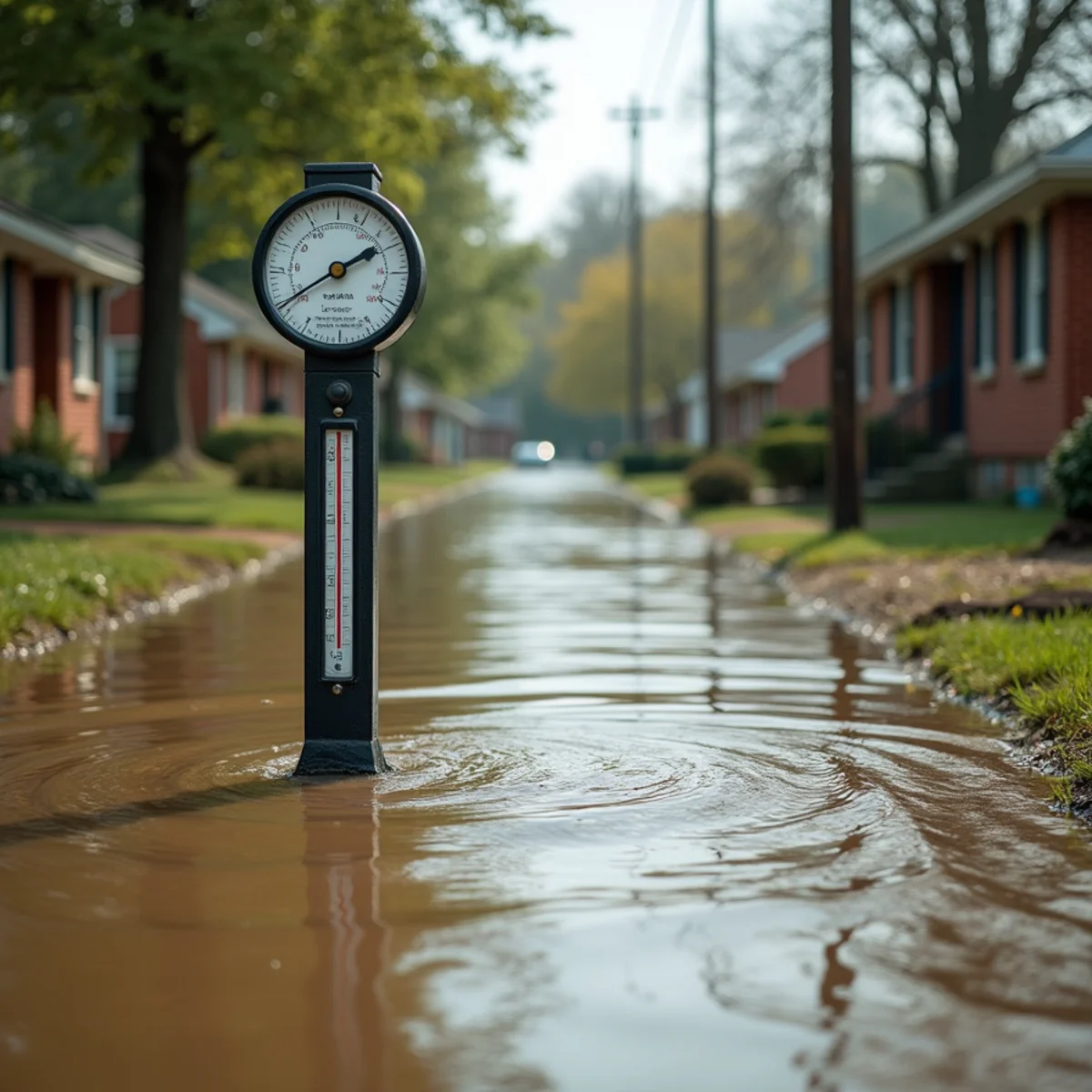
April 2025 wrote itself into Frankfort's flood history alongside 1937 and 1978 — a record crest that put water where some families had never seen it, and confirmed what the river neighborhoods have always known: elevation is destiny for anything mechanical that sits low. We spent the weeks after the water receded in crawlspaces and basements across Craw, Bellepoint, South Frankfort, and the creek bottoms.
Here's what the event taught us about protecting HVAC systems in river country — before the next gauge climb, not after.
What the Water Actually Did to Equipment
The pattern was consistent: any equipment that met moving water lost. Outdoor units silted to their fan housings, air handlers submerged in basements and crawlspaces, control boards drowned, duct insulation soaked into permanent wet blankets. Units that 'looked fine' above the water line often failed weeks later as contamination and corrosion worked through components that never fully dried.
The salvage exceptions were real but narrow: equipment where water clearly stayed below electricals, professionally cleaned, tested, and monitored. Everything else became a documented insurance claim — and the documentation quality decided how smoothly those claims moved.
The Elevation Lesson (Again)
The homes that returned to normal fastest shared one feature: elevated equipment. Outdoor units on raised platforms, air handlers in upstairs or attic mechanical spaces, electrical disconnects above the water path. In 2025, elevated equipment cost its owners a pressure wash; at-grade equipment cost them a system.
Every flood-zone replacement we've designed since follows the same standard: platforms sized to FEMA guidance for the property's flood zone, equipment placement above the historical high-water marks, and line sets and electricals routed with the river's habits in mind. The premium is modest; the math after one flood is decisive.
Need this handled by a pro today?Same-day service across Franklin County • 24/7 emergency dispatch
Call +1 (327) 210-5999The Documentation That Saved Claims
The claims that paid fastest had the same anatomy: dated photos of water lines against equipment, model and serial plates captured, the damaged components photographed before removal, and professional itemized estimates in adjuster format. Homeowners who photographed everything before cleanup — before the evidence dried and drained away — had dramatically smoother experiences.
Our storm-response documentation exists precisely for this: readings, photos, water-line measurements, and line-coded estimates that speak an adjuster's language. We also talk with adjusters directly when scope questions come up.
The Crawlspace Aftermath Nobody Budgets For
Flooded crawlspaces don't dry out on Kentucky's schedule — saturated duct insulation, wicking framing, and river-borne contamination become a months-long moisture and air-quality problem if left alone. The ducts that soaked in April were still raising humidity and mustiness in July until they were replaced or the space was professionally dried and sealed.
Post-flood crawlspace work is part of the HVAC project, not a separate afterthought: drainage, drying, duct replacement, and — increasingly — encapsulation that turns the space into something the next flood hurts less.
Your Pre-Next-Flood Checklist
Photograph your equipment and plates now, while everything's dry and healthy. Know your flood zone and your historical high-water mark. If your equipment sits at grade in a flood-prone area, get an elevation assessment — the cost of planning is a fraction of the cost of replacing. Verify your flood insurance covers the structure and contents the way you think it does. And save our number: when the gauge climbs, the phones light up in the order people call.
Call +1 (327) 210-5999 for a flood-readiness assessment. The river has flooded Frankfort in 1937, 1978, and 2025 — the only variable we control is how ready the equipment is when it happens again.
- Photograph your equipment and plates now, while everything's dry and healthy.
- Know your flood zone and your property's documented high-water marks.
- If equipment sits at grade in a flood path, get the elevation assessment — planning in February is cheap; planning in May is not.
- Verify your flood insurance covers structure and contents the way you think it does.
- Save the dispatch number where the power doesn't reach — when the gauge climbs, the phones light up in the order people call.
The Bottom Line
April 2025 settled what river-adjacent Frankfort already knew: elevation is destiny for low-sitting equipment. Photograph your system while it's dry, know your shutoffs, plan the platform before the next gauge climb — and when the water comes, document first and de-energize second. The river writes the events; readiness writes the recovery.
Frequently Asked Questions
If water stayed below electrical components and the unit passed professional cleaning and testing, continued service is reasonable with monitoring. If water reached electricals, replacement is the safe call regardless of how it runs — corrosion and contamination fail on their own schedule.
Above your property's flood history — in practice, 24–48+ inches for the lowest-lying blocks, per FEMA guidance for your zone. We assess your site's actual water lines and design to them.
NFIP and private flood policies generally cover structural-covered HVAC equipment (outdoor units, furnaces) as building property, with coverage limits — worth reviewing your policy's specifics. Documentation quality still decides how smoothly the claim pays.