
Between Lawrenceburg's distilleries and Frankfort's downtown, the Kentucky bourbon corridor has built a tourism economy out of hospitality buildings: tasting rooms, gift shops, visitor centers, event barns, and restaurants — most of them in buildings that were never designed for a thousand weekend visitors. Light-commercial HVAC in this corridor is a specialty of adaptation.
We serve it from both ends of the corridor. Here's what the work actually looks like.
The Load Profile of Hospitality
Hospitality buildings have wild load swings: empty Tuesday mornings, packed Saturday afternoons, doors opening every forty seconds, body heat accumulating in tasting lines. Equipment sized for the building's square footage routinely underperforms for the building's actual use — the tasting room that's perfect at 11 AM and stuffy by 2 PM is a load-profile problem, not an equipment-size problem.
Solutions live in zoning and controls: independent zones for entry, tasting, and retail areas; ventilation rates that respond to occupancy; and dehumidification that keeps glassware from sweating and visitors from wilting. The best bourbon-country hospitality spaces feel effortless — that's engineering, not luck.
- Wild swings: empty Tuesday mornings, packed Saturday afternoons, doors opening every forty seconds.
- Body heat and traffic load equipment sized for square footage, not use — zoning fixes what tonnage can't.
- Entry, tasting, and retail areas want independent zones; ventilation should respond to occupancy.
- Dehumidification keeps glassware from sweating and visitors from wilting — the review-proof comfort standard.
Adaptive Reuse Buildings: The Corridor's Signature Challenge
Bourbon tourism happens in adapted buildings — tobacco warehouses, general stores, barns, and downtown storefronts converting to visitor use. Each adaptation writes its own HVAC story: exposed-beam ceilings that can't take dropped ducts, masonry walls that resist conventional equipment, event spaces whose peak loads happen twelve weekends a year.
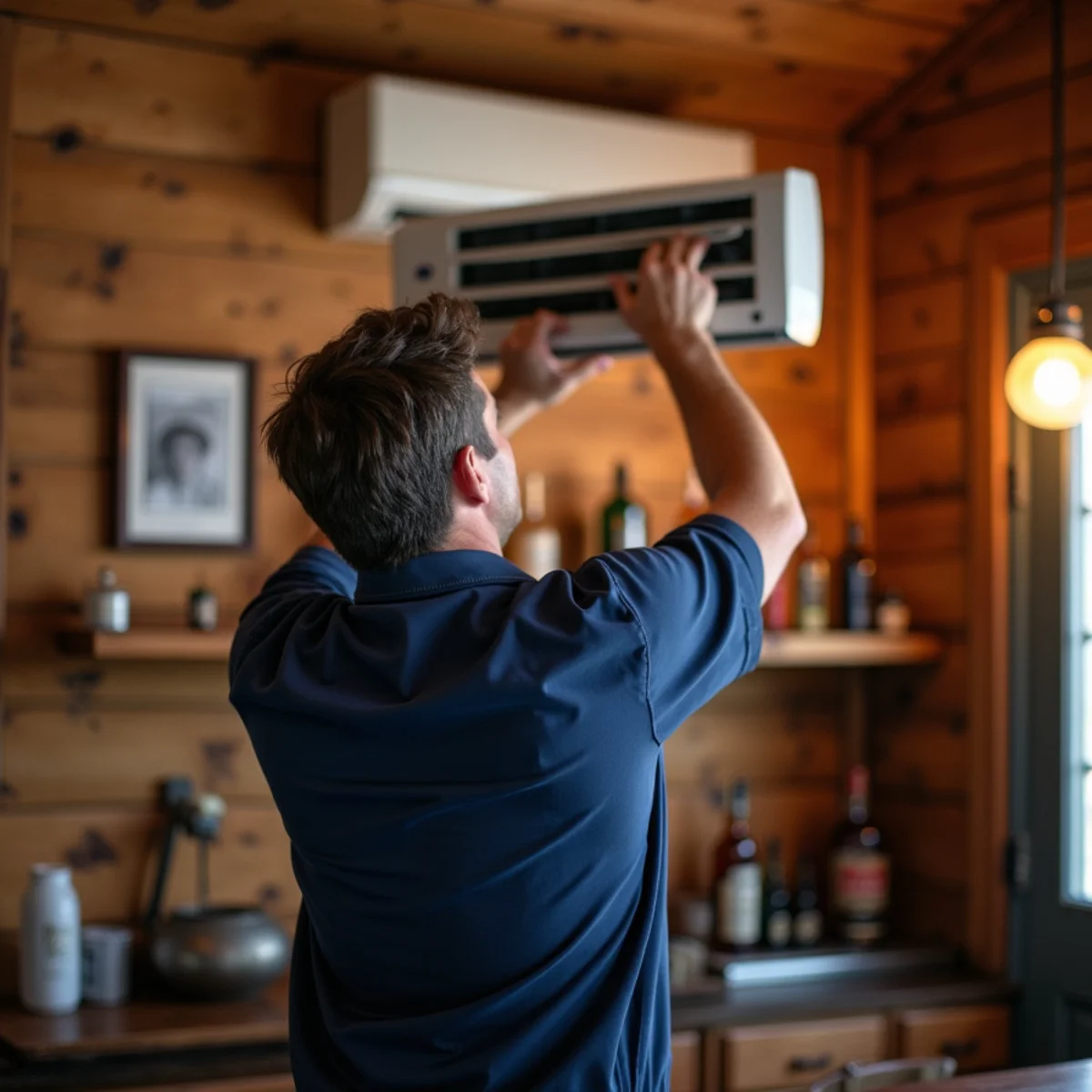
Mini-splits and zone systems are the corridor's quiet heroes: conditioning added spaces without gutting character, serving event barns that need capacity on demand, and giving visitor centers the control granularity their use pattern demands. We've installed them across adapted buildings from Versailles to downtown Frankfort.
Need this handled by a pro today?Same-day service across Franklin County • 24/7 emergency dispatch
Call +1 (327) 210-5999The Weekend-Urgency Reality
In tourism businesses, HVAC failure timing isn't uniform — a Thursday failure is a nuisance, a Saturday-morning failure is a lost day. Light-commercial service in the corridor runs on that calendar: priority response for hospitality clients, after-hours repairs between close and open, and maintenance scheduled for the building's slow days, not the vendor's.
Maintenance contracts built for the corridor reflect it: quarterly PM with pre-weekend checks during season, filter programs sized to visitor traffic (hospitality buildings load filters at retail-traffic rates), and a dispatch line that knows a tasting room at 10 AM Saturday is a different category of call.
From Lawrenceburg to Frankfort: One Corridor, One Standard
The corridor's businesses share geography, economics, and now a vendor: we run Lawrenceburg and Versailles routes alongside our Frankfort base, which means distillery-country clients get capital-city responsiveness — and Frankfort clients get the corridor expertise their hospitality neighbors rely on.
Whether it's a Wild Turkey-adjacent visitor center, a Versailles event barn, or a downtown Frankfort tasting room, the standard is the same: documented equipment, hospitality-calendar maintenance, and response times that respect the weekend.
Call +1 (327) 210-5999 for a light-commercial assessment. Your visitors came for the bourbon; the least your building can do is stay comfortable while they're finding out about it.
The Bottom Line
The distillery corridor runs on adaptive buildings and weekend urgency — loads that swing with tour buses, equipment that must disappear into character, and maintenance timed to slow days. From Lawrenceburg to downtown Frankfort it's one corridor, one standard: documented equipment, hospitality-calendar service, and response times that respect the weekend.
Frequently Asked Questions
Yes — Lawrenceburg, Versailles, Midway, and Frankfort are all on our scheduled commercial routes, with emergency coverage that treats the corridor as one service area.
Zoned systems with on-demand capacity — mini-splits or staged units — serve seasonal-peak buildings far better than one big unit idling all year. The assessment models your actual event calendar against the load profile.
That's the standard, not a favor — after-hours and between-tour service windows at quoted rates, maintenance on your slow days, and priority response through season. Hospitality calendars are how we schedule.