
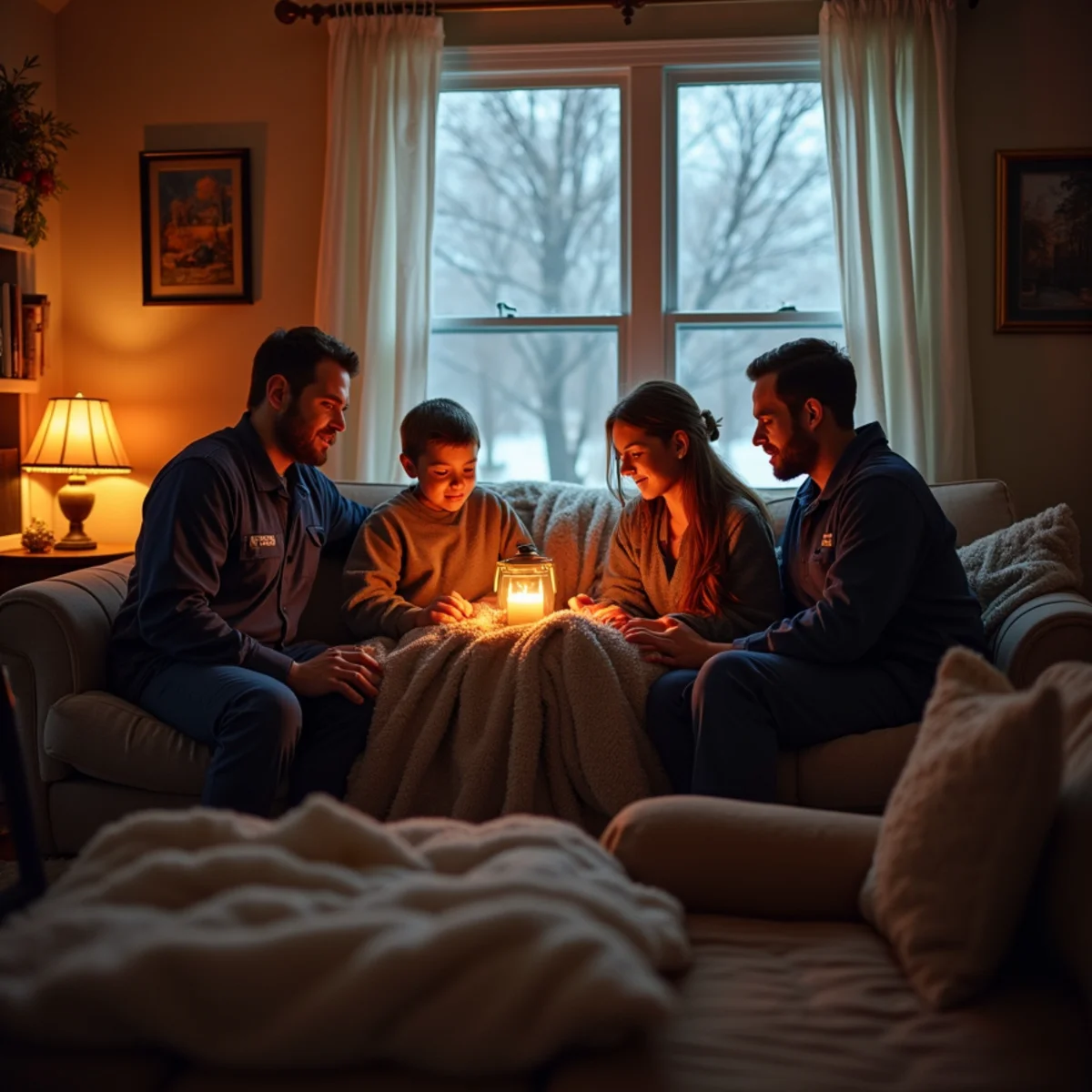
Central Kentucky ice storms don't announce themselves politely. The 2003 and 2009 storms taught Franklin County hard lessons: power lines down for days, trees splitting under ice load, and furnaces that quit precisely when nobody could drive anywhere. If your heat dies during this winter's ice event, what you do in the first hour matters as much as the repair itself.
This guide is the same protocol our dispatchers walk Frankfort homeowners through at 2 AM — the safety steps, the pipe protection, the heat-preservation moves that buy you time until a technician can reach you.
First: Rule Out the Free Fixes (Safely)
Before anything else, check the obvious with the lights on and dry hands. Is the thermostat set to heat, not cool or off? Do the batteries need replacing? Has a breaker tripped in the panel — furnaces and air handlers sit on dedicated circuits that can trip during power surges, which are common when ice brings lines back after an outage.
If your home has a float switch in the condensate drain pan (most do), a full pan shuts the system down to prevent water damage. That's not a malfunction — it's protection. If you find standing water near the air handler, leave the system off; that's a professional call, not a DIY reset.
Protect Your Plumbing First
In a January ice storm with lows in the low 20s, your pipes are the clock. An unheated Frankfort home can drop below freezing in interior walls within hours. Open the cabinet doors under every sink on an exterior wall, let cold-water faucets on those walls drip at pencil-lead thickness, and close doors to rooms you're not using to concentrate warmth where people are.
If a pipe already froze, don't wait for the furnace repair to deal with it — know where your main water shutoff is before you need it. Frozen pipes that thaw into bursts cause more ice-storm damage than the storm itself.
Need this handled by a pro today?Same-day service across Franklin County • 24/7 emergency dispatch
Call +1 (327) 210-5999Heat the People, Not the House
Gather everyone into one room — ideally interior-facing with the fewest windows — and close it off. Layers, blankets, and sleeping bags outperform trying to heat the whole structure. Safe supplemental heat means rated indoor heaters on hard surfaces, far from curtains and bedding, never left running while everyone sleeps.
Never use ovens, grills, camp stoves, or generators indoors. Every Kentucky ice storm produces carbon monoxide poisonings from exactly these shortcuts, and CO deaths are the storm's cruelest toll. If anyone feels dizzy, headachy, or nauseated, get to fresh air immediately.
Heat Pumps: The Frozen-Unit Question
If you have a heat pump, some ice is normal — the unit runs defrost cycles in freezing weather and steams off moisture. But a unit entombed in a solid ice block, with the fan unable to turn, has a real problem: likely a failed defrost board or sensor, exactly the failure mode that 2009 produced all over Bald Knob and the ridges.
Don't chip at the ice. You'll bend coil fins and make a repair into a replacement. Switch the thermostat to EM (emergency) heat if it has that setting — it costs more to run but protects your home — and keep everyone warm until service arrives.
When to Call, and What Happens Next
Call the moment you know the system is down and the quick checks haven't restored it — early calls get earlier windows when every tech in the county is booked. Tell dispatch if there are infants, seniors, medical equipment, or already-frozen pipes in the home; those calls are triaged to the front.
During major ice events, we run continuous emergency rotations across Franklin County. If roads are impassable to your street, dispatch will stay on the phone with you — coaching, troubleshooting, and re-checking your window — until a truck can physically reach you. You're not forgotten just because the road is iced.
- Thermostat settings and batteries first
- Breaker check after any power flicker
- Drip faucets on exterior walls; open under-sink cabinets
- One warm room, safe heaters only, never ovens or grills
- Heat pump frozen solid: switch to EM heat, don't chip ice
- Call early; disclose vulnerable household members
The Bottom Line
Ice storms will come to Central Kentucky again — the 2003 and 2009 veterans will tell you that. What separates a manageable night from a miserable one is the first hour: protect the pipes, gather the household into one room, use safe heat only, and call early. When you need us, a live dispatcher answers at any hour, and stocked trucks roll across Franklin County even when the trees are popping.
Frequently Asked Questions
A well-sealed home holds survivable indoor temperatures for hours, but pipes on exterior walls can freeze within a few hours of hard freeze. That's why the first hour matters: pipe protection and concentrated warmth buy the time your repair needs.
On a heat pump, cool-ish air during defrost cycles is normal for short periods. If a gas furnace blows truly cold air continuously, it's likely a failed ignitor or flame sensor — a same-visit repair for a stocked truck, storm or not.
After-hours rates apply and are quoted on the phone before we roll — never a surprise at the door. Maintenance-plan members pay no overtime diagnostic during emergencies, which is worth remembering every time a storm is forecast.