
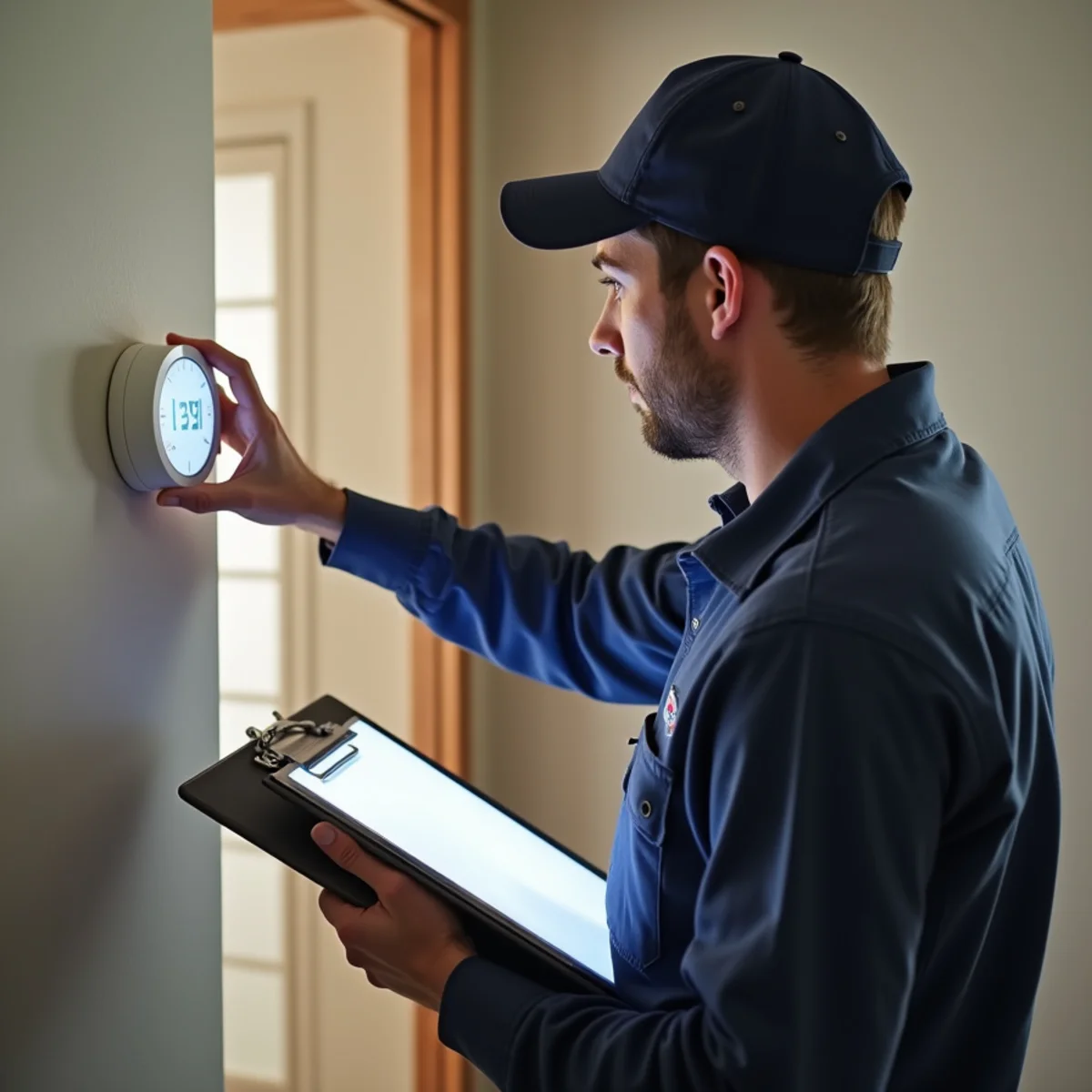
Frankfort's rental market — state-worker relocations, college-adjacent units, and the Woodlake subdivisions' investor homes — runs on turnover speed. And nothing stalls a turnover like HVAC: the unit that worked 'fine' with the last tenant, the filter nobody changed in a year, the emergency call that arrives with the new lease. Property managers who systematize HVAC turn it from a turnover risk into a solved problem.
This is the guide we'd write for our landlord clients — the inspection routine, the emergency protocol, and the lifecycle math across multiple properties.
The Turnover Inspection: A Standard, Not a Favor
Every turnover deserves the same HVAC checklist: filter condition (the tenant-history tells you everything), thermostat function and batteries, register airflow in every room, condensate drain condition, outdoor unit condition and clearance, and a system test in both modes. Document with photos and dates — the file protects you in disputes and warranties alike.
The hidden value: catching the failing capacitor at turnover costs a same-visit fix; catching it in month three of a new lease costs an emergency call with a tenant managing the scheduling. Turnover timing is diagnostic leverage — use it.
- Filter condition — the tenant-history tells you everything about how the system was treated.
- Thermostat function and batteries; register airflow in every room.
- Condensate drain condition and outdoor unit clearance and condition.
- A full system test in both modes, documented with photos and dates.
- Catching the failing capacitor at turnover costs a same-visit fix; catching it in month three costs an emergency call with a tenant managing the scheduling.
The Tenant Emergency Protocol
Every landlord needs a written HVAC emergency line of authority: what counts as an emergency (no heat in freezing temps, no cooling in heat waves, water, smells), who the tenant calls (us, directly, 24/7), who pays what without approval, and what happens next. Properties where tenants call the owner first lose hours to phone tag; properties with a direct vendor line resolve in one call.
Our landlord arrangements formalize this: tenants call our dispatch directly, work is documented to the owner with photos and invoices, and approval thresholds are set in advance. The result reads like a solved problem in the reviews.
Need this handled by a pro today?Same-day service across Franklin County • 24/7 emergency dispatch
Call +1 (327) 210-5999Multi-Property Maintenance: The Portfolio Math
Landlords managing multiple doors benefit from portfolio-level maintenance: scheduled tune-ups across properties on a route, filter programs sized per unit, and condition reports that let you see which systems are aging toward replacement and when. Portfolio visibility converts 'surprise' into 'budgeted.'
The economics compound: maintained systems fail less (fewer emergency calls, fewer vacancy extensions), warranty claims succeed (documented maintenance), and replacements arrive planned. Across a Woodlake-scale portfolio, the plan typically pays for itself in one avoided turnover delay.
The Replacement Lifecycle, Landlord Edition
Rental equipment makes different economics than owner-occupied: durability and low-maintenance profiles often beat premium efficiency (tenants pay utilities in many leases), while reliability beats both — an emergency replacement in January with a tenant in place is the costliest HVAC event in property management. Replacement decisions should happen at turnover, on the landlord's calendar, with the next five years in mind.
We help landlords time replacements against equipment age, repair history, and turnover schedules — and stage multi-unit projects when buildings allow. The goal is that no tenant ever experiences an emergency that a turnover inspection would have caught.
Setting It Up
Start with a portfolio assessment: we document every property's equipment — ages, models, condition, history — and build the maintenance calendar and emergency protocol around it. From there it runs itself: scheduled visits, direct tenant dispatch, owner documentation.
Call +1 (327) 210-5999 to set up the portfolio assessment. Frankfort's rental market rewards managers whose properties just work — HVAC is where 'just works' starts.
The Bottom Line
Turnovers are diagnostic leverage, tenant emergencies run on protocol, and portfolios reward visibility — that's the property-management HVAC triangle. Set the inspection standard, formalize the emergency line, and let condition reports convert surprises into budget lines. Frankfort's best-reviewed managers run HVAC exactly this way.
Frequently Asked Questions
It depends on cause and your lease: neglected filters and physical damage typically fall to tenants; wear failures fall to owners. Our documentation — photos of filter condition, failed parts, cause notes — gives you the evidence either way.
Yes — with a landlord arrangement, tenants reach our 24/7 dispatch directly, work is documented to you, and approval thresholds are set in advance. It's the single biggest time-saver property managers report.
Portfolio rates apply across maintenance plans, and route scheduling groups properties by area — Woodlake doors on Woodlake days. Multi-property quotes are built once and applied consistently.