
Kentucky has become one of the country's more active tornado states, and the Ohio Valley corridor puts Franklin County in the conversation every spring. Most storms pass, some near-miss, and a few make direct history. But even the near-misses do quiet damage to outdoor HVAC equipment — and the checks in the 48 hours after any severe storm decide whether that damage stays quiet or becomes a July breakdown.
Here's the post-storm checklist, from the crew that's assessed storm damage across the region.
The Walk-Around: What to Look For
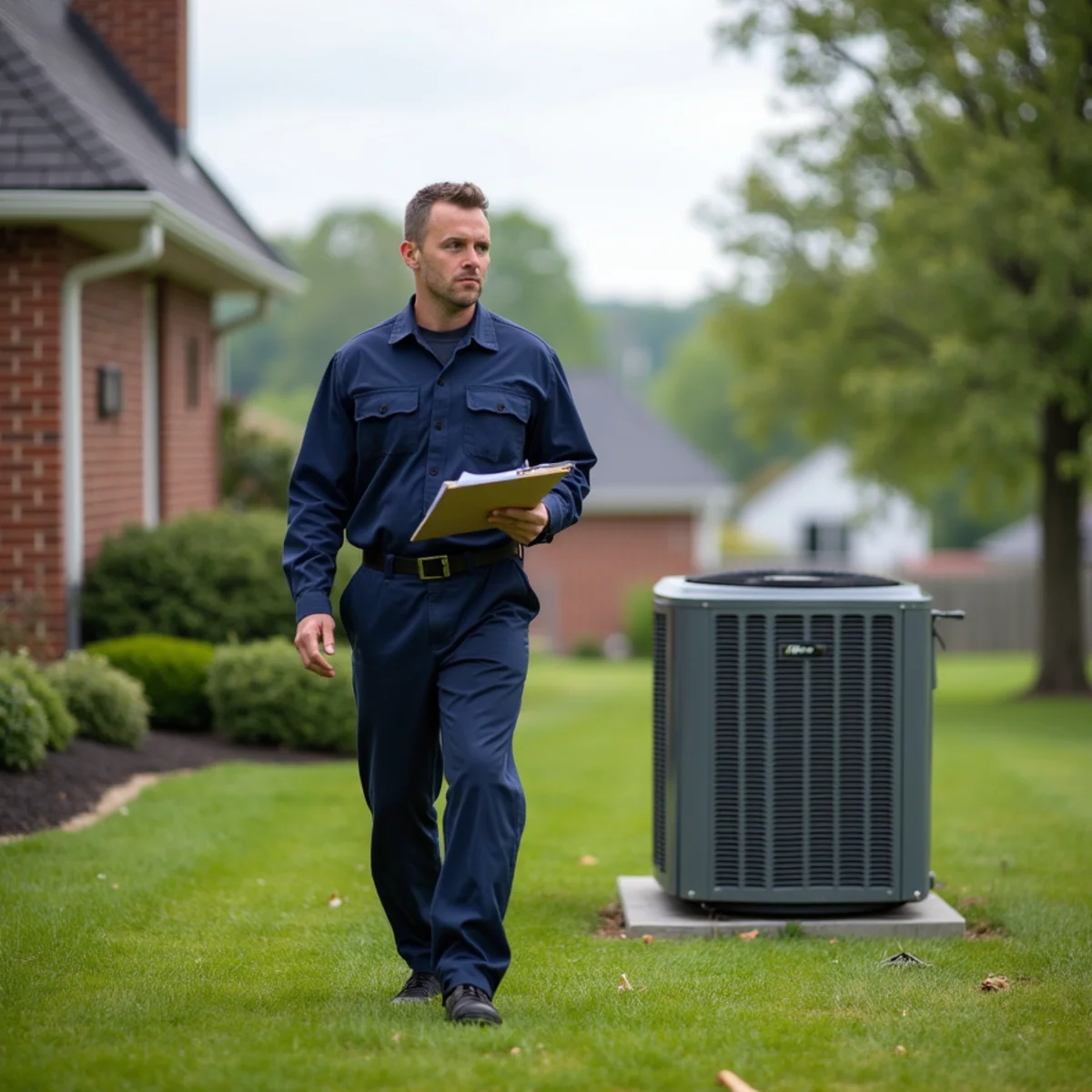
Start outside with the condenser: is it standing plumb or leaning? Leaning means the pad shifted or the unit took a hit — internal damage is likely even if it runs. Look for debris strikes: hail dings on the coil fins, dents in the cabinet, anything wind-blown lodged against or through the unit. Check that the fan grille is intact and nothing's nesting in the cabinet.
Then the line set and electrical: disconnected or kinked refrigerant lines, pulled disconnects, damaged conduit. Wind finds anything loose, and a line set that took a hit can leak slowly for weeks before it announces itself.
The Power Anomalies That Follow Storms
Outage-restored power is hard on HVAC electronics — surges and brownouts kill capacitors, control boards, and contactors in waves during the days after a big storm. Warning signs: breakers that trip, units that hum without starting, systems that run but behave erratically, or thermostats that reset themselves.
If your power flickered hard or browned out, consider a post-storm electrical check of the HVAC circuits — catching a stressed capacitor costs a fraction of the compressor it protects. Whole-home surge protection is worth a conversation in tornado country.
Need this handled by a pro today?Same-day service across Franklin County • 24/7 emergency dispatch
Call +1 (327) 210-5999Water, Wind, and the Quiet Intrusions
Driving rain finds entry points: units in low spots that ponded, condensate drains backing up, attic systems under wind-lifted roofing that now drip. Check the mechanical spaces for new moisture — early water damage is cheap and late water damage is a claim.
Wind-blown insulation is its own hazard: loose-fill from lifted attic panels ends up in return ducts and on coils, choking airflow and shedding fibers into the air. If your attic was compromised, the ductwork deserves an inspection before summer loads the system.
Run It or Call It? The Decision Test
Run it if: the unit stands plumb, the fan spins clean, no breakers trip, no unusual sounds or smells, and cooling performs normally. Watch it: run with attention for a few days — new sounds, intermittent starts, or weak performance are early reports from damaged components.
Call us if: the unit leans, breakers trip, anything smells burnt, the fan stalls, hail visibly pocked the coil, or debris struck the cabinet. Post-storm assessments are priced like ordinary diagnostics — and the documentation doubles as insurance evidence if damage emerges later.
- Plumb or leaning? Leaning = internal damage likely
- Coil fins dented/hail-pocked = capacity loss, worth assessing
- Post-outage electrical gremlins = check before they strand you
- New moisture in mechanical spaces = investigate early
- Document anything odd with photos — claims live on evidence
The Bottom Line
Kentucky's severe season writes HVAC claims every spring — most from storms that never made the news. The walk-around takes ten minutes, the electrical patience takes a few days, and the documentation decides the claim. When something leans, stalls, or smells wrong after a cell passes, our post-storm assessments are priced like ordinary diagnostics.
Frequently Asked Questions
A quick visual walk-around is worth ten minutes after any severe-cell day: straight-line winds, hail, and power anomalies extend well beyond tornado tracks. Most post-storm HVAC damage we see comes from storms that never made the news.
A leaning unit is a unit with a stressed refrigerant circuit and a strained fan assembly — it can wait poorly. Righting and assessing it early is a pad-and-mount repair; waiting turns it into a line-set and compressor conversation.
Typically yes under wind/hail coverage, subject to your deductible — hail-pocked coils lose capacity and life, and adjusters recognize documented hail damage. Photos before cleanup, as always, decide how smoothly it goes.